
Body
Small-batch skincare: why less is more, and how to tell if it is the real thing
June 16, 2026 · 6 min read
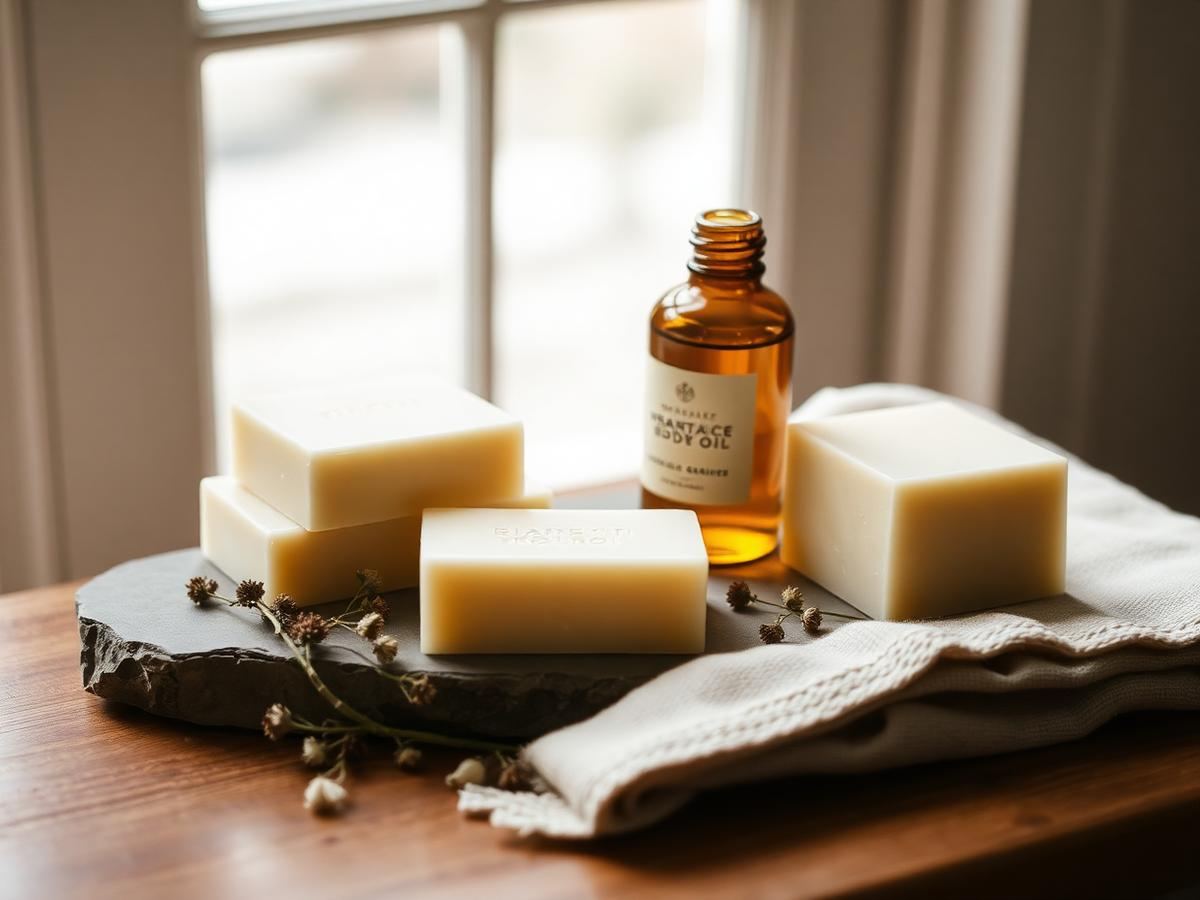
The phrase is on a lot of packaging now, including ours. It is worth being specific about what it means, because a term everyone uses is a term that stops meaning anything.
What small batch actually changes
A batch you can lift is a batch you can watch. Temperature, cure time, and how a formula behaves on a humid day are all things you notice at fifty bars and cannot notice at fifty thousand.
It also changes the shelf life math. Large-scale production has to survive a warehouse and a long retail sit, which pushes formulas toward stronger preservation and more stabilizers. A batch that sells out in six weeks does not carry that burden.
And it changes accountability. When one person makes the batch, there is one person to ask.
Fewer ingredients is a consequence, not a slogan
Short formulas are easier to troubleshoot. If a bar is drying, there are six things it could be, not thirty. That is why small makers drift toward simplicity — it is practical before it is philosophical.
Simple is not automatically better. A well-made product with twelve ingredients can beat a badly made one with four. Ask what each one does.
Five questions that separate real from decorative
How big is a batch, in units? Who physically makes it? What is your cure or rest time? What is the full formula at percentage? What happens when a batch fails?
A maker will answer all five without flinching, and the fifth answer is the most revealing. Every real maker has thrown out a batch.
The trade-offs we accept
Things sell out. Colors and scents vary slightly between batches, because tallow and oats and oils are agricultural and not identical every time. A bar cured in February can feel a touch different from one cured in August.
We would rather tell you that than engineer the variation out of it.